A perspective piece from The Listening Market
The Future of Energy doesn’t usually arrive as one dramatic breakthrough — it tends to show up as a series of smaller shifts in how power gets made, stored, and used, stacking up until the whole system looks different than it did a decade earlier.
Our take: the Future of Energy being shaped right now isn’t about a single new source replacing everything else — it’s about a more flexible, distributed system replacing a much more rigid one. This isn’t a data-backed forecast, just our read on where things seem to be heading.
Here’s how we see it.
What Ways Is Science Rethinking the Future of Energy?
A few patterns stand out as places where the thinking seems to be shifting most:
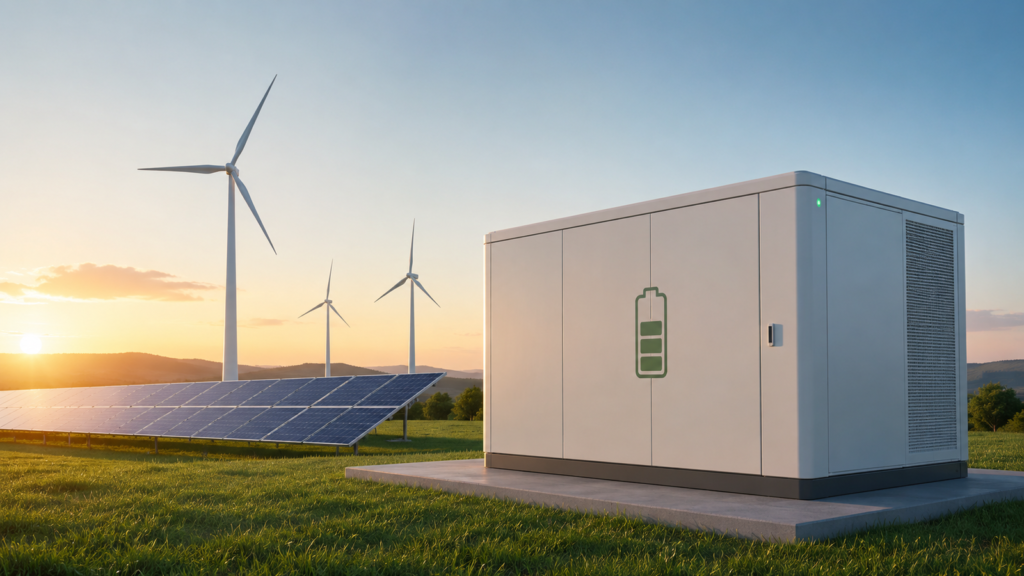
- Storage is becoming as important as generation. Being able to hold onto energy for when it’s actually needed seems to be getting as much attention as producing it in the first place.
- Smaller, distributed systems are gaining ground. Instead of relying entirely on large, centralized power sources, more localized generation seems to be filling in the gaps.
- Efficiency improvements are compounding. Small gains across manufacturing, transmission, and everyday appliances seem to be adding up to a meaningful reduction in overall demand.
- Materials science is quietly enabling a lot of this. New approaches to building components at a molecular level seem to be improving performance across multiple energy technologies at once.
- Grids are getting smarter, not just bigger. Systems that can respond dynamically to shifting demand seem to be replacing the older model of simply building more capacity.
- Waste heat and byproducts are being reconsidered. Energy that used to be lost in industrial processes increasingly seems to be treated as a resource worth capturing.
- AI-assisted modeling is speeding up experimentation. Testing new approaches in simulation before real-world trials seems to be compressing research timelines considerably.
- Consumer behavior is becoming part of the equation. How and when people use energy day to day increasingly seems to factor into system design, not just the supply side.
None of these exist in isolation — a lot of what feels significant about the Future of Energy right now seems to sit at the overlap of two or three of these shifts at once.
Why Does Storage Seem to Matter as Much as Generation Now?
For a long time, the conversation around energy focused almost entirely on how it gets produced. That focus seems to be broadening. Producing energy without a reliable way to store and release it when needed creates its own set of problems — so storage seems to be catching up in importance rather than staying an afterthought.
Our sense is that this shift toward storage is one of the more underrated parts of the Future of Energy conversation — it doesn’t generate the same headlines as a new generation method, but it may end up mattering just as much.
Is This Shift Mostly About New Technology, or Better Systems Thinking?
Probably more of the latter than people assume. Individual technologies matter, but a lot of what seems to be changing is how the pieces fit together — smarter grids, more responsive demand, and generation and storage treated as one connected system instead of separate problems.
Our honest read: the Future of Energy looks less like a single invention and more like an increasingly well-coordinated system, with a lot of moving parts syncing up better than they used to.
Should We Be Skeptical of Energy Predictions Like These?
We think a fair amount of skepticism is warranted here. Energy predictions have a mixed track record — some technologies scale quickly, others stay promising-but-early for far longer than expected.
That’s part of why we’re framing this as our own read rather than a confident forecast. The parts of the Future of Energy worth watching closely are usually the ones still gaining ground a few years after the initial excitement, not the ones with the loudest early headlines.
What Might This Mean for Everyday Energy Use?
If these patterns continue, it’s reasonable to expect energy systems that respond more dynamically to actual demand, with efficiency gains showing up quietly in everyday appliances and infrastructure rather than through one dramatic switch.
Whether that translates into meaningfully lower costs or environmental impact at scale is genuinely uncertain — it depends on how consistently these individual pieces continue to improve together.
Where We Think This Is Heading Next
If current patterns continue, we’d expect the Future of Energy to keep favoring flexible, distributed, and efficiency-focused systems over the older model of simply building more centralized capacity. We’d also expect storage and smart-grid technology to keep closing the gap in attention they’ve historically gotten compared to generation.
None of this is a certainty — it’s our interpretation of where things seem to be moving, and we’ll keep watching it closely. For more perspectives like this, browse our other reads on The Listening Market.
This piece reflects the perspective and observations of The Listening Market team, not data analysis or research findings. We share it as a starting point for conversation, not a definitive source.