A perspective piece from The Listening Market
Personal style is pointing in one clear direction in 2026: away from “what’s trending” and toward “what’s mine.” A jacket that goes from a morning meeting to an evening dinner. Sneakers under a suit. A vintage brooch pinned to a thrifted denim jacket. None of this would have made much sense on a runway a decade ago — today it barely raises an eyebrow.
Our take: the biggest shift personal style is bringing forward is a move toward buying less but choosing more deliberately — mixing comfort with polish, old with new, and letting personal identity, not a seasonal must-have list, decide what goes in the wardrobe. This isn’t a data-backed forecast, just a read on where things seem to be heading.
Here’s how we see this shift playing out on The Listening Market.
Why Is Personal Style Moving Away From Fast Fashion?
For decades, fashion ran on a simple loop: a small circle set the direction, and everyone else followed. That loop looks like it’s breaking down, and it’s reshaping personal style as we head through 2026.
A few things seem to be behind it:
- Trends move faster than anyone can keep up with. When a new aesthetic seems to emerge every few weeks, chasing all of them starts to feel exhausting and expensive — so people appear to be opting out of the chase altogether.
- Style discovery feels less centralized. A look can now catch on almost anywhere — a street photo, a small shop, someone’s bedroom — rather than only from a handful of traditional tastemakers. With no single source calling the shots, no one trend seems to dominate the way it once did.
- People seem to be treating clothing as something worth holding onto. There’s a growing sense that buying is becoming more considered — fewer impulse purchases, more pieces people actually intend to keep.
The result, as we see it: a wardrobe built around lifestyle rather than calendar. Someone working from home might lean into relaxed tailoring. A frequent traveler might prioritize pieces that pack light and hold up. Someone who prefers second-hand finds is quietly building a wardrobe no algorithm suggested.
Why Has Comfort Become a Core Part of 2026 Style?
The old, unspoken rule — suffer a little to look good — seems to be fading. The emerging standard looks more like this: clothing has to hold up across a full, unpredictable day.
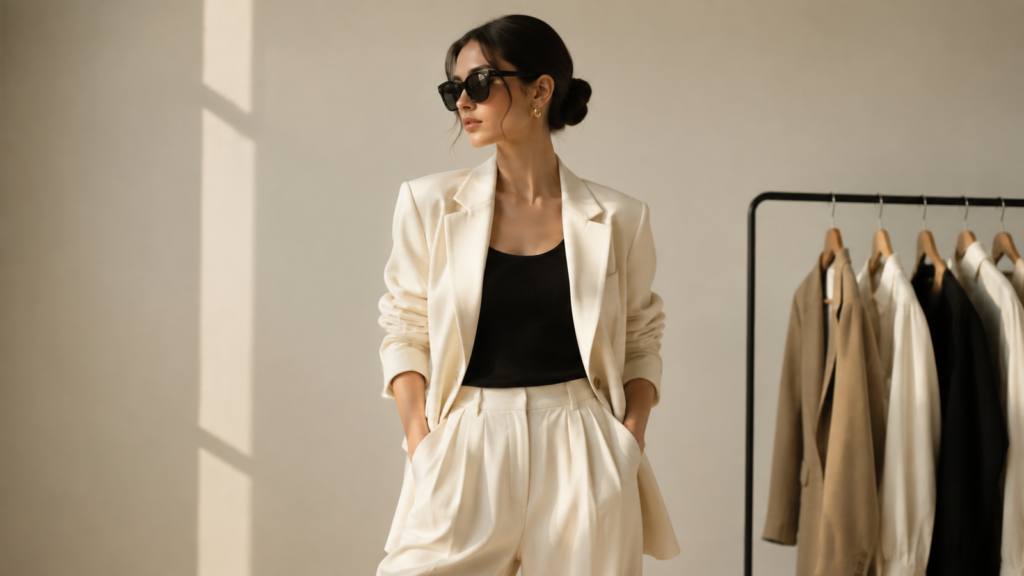
That might explain why relaxed tailoring, elevated basics, and quietly comfortable “dress” pieces seem to be having a moment. A blazer that needs to survive a commute, a meeting, and dinner without a wardrobe change in between says a lot about how people are living now.
We don’t read this as lowered standards — more like a redefinition of “put together.” Polish used to lean on structure and restriction. It increasingly seems to be about fit, feel, and how a piece actually moves with the person wearing it.
Is Sustainability Really Shaping Personal Style Right Now?
It’s hard to say for certain without real data behind it, but the signs seem to point toward the mainstream. Questions about where clothes are made, what they’re made from, and how long they’ll last appear to be coming up more often — not just from a small, dedicated group of shoppers.
A well-worn jacket carries a story a brand-new copy can’t. A visibly repaired piece can say something about a person’s values, not just their budget. That kind of emotional durability — alongside material durability — feels like it’s becoming part of what people are shopping for, even if we can’t back that with hard numbers yet.
How Is Technology Shaping Personal Style?
Even where it’s invisible, technology’s influence seems to be growing:
- More personalized recommendations. Shopping experiences increasingly feel tailored to the individual rather than showing everyone the same thing.
- Tools that help people decide before they buy. Ways to preview how something might look or fit seem to be reducing guesswork.
- Faster experimentation behind the scenes. It’s plausible that emerging tools are helping people test ideas — colors, shapes, direction — before committing, speeding up a process that used to rely purely on instinct.
None of this looks like it’s replacing personal taste — if anything, it seems to be removing some of the guesswork around it.
So What Does “Personal Style” Actually Mean in 2026?
Our read: there’s no longer one right answer. A minimalist in neutral tones and someone mixing five patterns in one outfit can both be on-trend — because the trend increasingly seems to be having a clear point of view, not following a specific look.
Clothing still communicates something about mood, values, and identity before a word is spoken. What seems to be changing is who people are dressing for — themselves first, and any external “in crowd” a distant second.
Where We Think Personal Style Is Heading Next
If current patterns continue, we’d expect personalization to keep getting quieter and more accurate, sustainability to shift from a nice-to-have into a baseline expectation, and trends to keep fragmenting into countless individual styles rather than one dominant look.
None of this is a certainty — it’s our interpretation of where personal style seems to be moving in 2026, and we’ll keep watching it closely. For more perspectives like this, browse our other style reads on The Listening Market.
This piece reflects the perspective and observations of The Listening Market team, not data analysis or research findings. We share it as a starting point for conversation, not a definitive source.